
“They work well together” is the kind of line that shows up in every agency pitch and explains nothing. It’s true, but it’s not an answer, it’s a placeholder for an answer.
This post picks up after the decision of which one to start with has already been made, or set aside, and gets into what actually happens once PPC and SEO are both running.
There are four real mechanisms doing the work, and none require taking anything on faith.
PPC Data Tells SEO Exactly What to Target
PPC generates real conversion data almost immediately, which keyword exactly triggered a lead or a sale, not just which one got clicked, and that data is far more reliable than keyword-volume tools for deciding what SEO should actually target. Instead of guessing which terms matter based on search volume alone, SEO gets to start from proof.
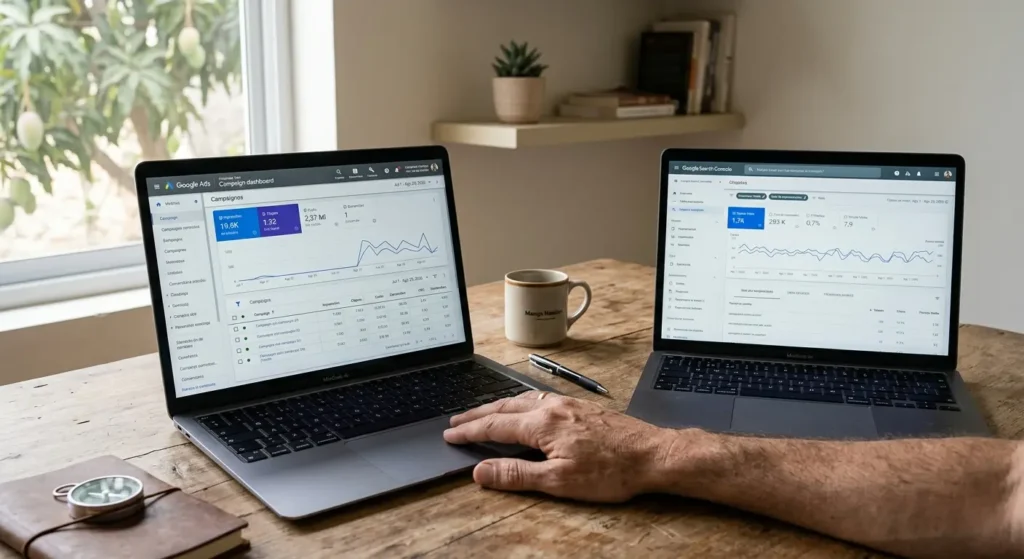
In practice, that means mining the search terms report for the exact phrases already converting through paid traffic, then prioritizing SEO content and optimization around those specific terms first, ahead of higher-volume keywords that only look promising on paper.
A term with modest search volume but a proven conversion rate is a better SEO bet than a high-volume term nobody’s confirmed actually buys anything.
SEO Lowers Cost Over Time, PPC Covers a Growing Gap
As a page starts ranking organically for a given keyword, the need to pay for clicks on that term drops, freeing up budget for keywords SEO hasn’t reached yet.
That’s the classic version of the mechanism. What’s changed in 2026 is the size of the gap PPC still needs to cover even after a page ranks well.
AI Overviews now answer a meaningful share of queries directly on the results page, and recent research has found organic click-through rates dropping by double-digit percentages on queries where an AI Overview appears, even for pages that hold the top organic position. Ranking first doesn’t guarantee the click it used to.
That makes PPC’s role less about “bridging the first six months” and more about covering real ground that organic increasingly can’t fully reclaim on its own, on top of the keywords SEO hasn’t caught up to yet.
One Landing Page, Improved by Both Channels at Once
When PPC and SEO send traffic to the same well-built landing page instead of separate stripped-down and content-heavy versions, improvements made for one channel benefit the other automatically. PPC’s advantage is speed, enough consistent traffic to run real conversion tests in weeks, not months.
Those test results, what headline converts better, which layout keeps people on the page, apply directly to the same page organic traffic is landing on too.
SEO doesn’t have to wait months to learn what PPC already proved in a few weeks, and PPC campaigns benefit from a page that’s also been shaped by whatever organic-side content and trust signals SEO has built into it.
Showing Up Twice on the Same Results Page
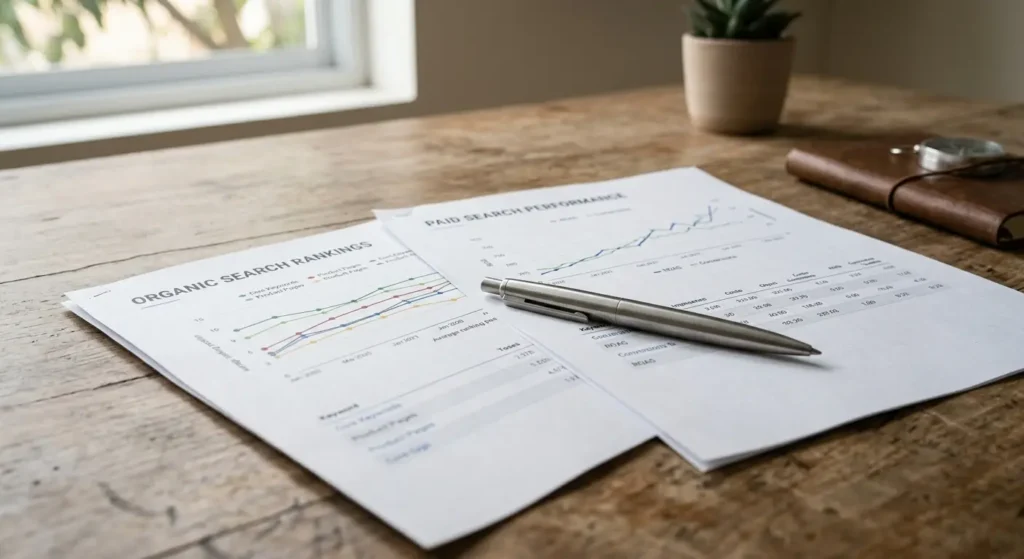
Google has been clear that running ads doesn’t move organic rankings, the two systems are kept separate on purpose. What running both does affect is how much combined space a business occupies on the results page for the same search, and that combined presence measurably increases how often people click on either listing.
Seeing a business twice on the same page, once as an ad and once organically, builds a small but real sense of familiarity and trust before a single click happens.
Some people who’d normally skip a paid listing will click the organic one right below it once the brand name has already registered. That’s a real effect, not a synergy platitude, and it only happens when both channels are actually running.
What This Looks Like for a NYC Business
A NYC example makes this concrete faster than describing it in the abstract. Here’s how the four mechanisms above actually played out for one local business that started running PPC and SEO together from day one, instead of choosing between them.
Take a family dental practice in Astoria. PPC launches first and, within a few weeks, the search terms report shows “emergency dentist Astoria” converting at a far higher rate than the broader “dentist Queens” term the practice assumed would matter most. That becomes the SEO content priority instead of a guess.
Six months in, the practice ranks organically for “emergency dentist Astoria” and pulls back paid spend on that exact term, while keeping PPC live on everything organic hasn’t reached yet, plus a modest budget on the now-ranking term itself, since AI Overviews are still capturing some of those clicks before they ever reach a listing.
That’s the compounding effect in practice: proven data driving content decisions, a shrinking but real paid presence on terms that rank, and one landing page getting sharper from both directions at once.
If search and social are both on the table for that same budget, the next real question is Google Ads vs Meta Ads: Where Should Your Budget Go.
Frequently Asked Questions
Does running PPC actually boost my SEO rankings?
No, not directly. Google has stated plainly that ad spend has no effect on organic ranking, and the two systems are kept deliberately separate. What PPC can do is generate data, conversion-proven keywords, landing page test results, that makes the SEO work built around it more effective, which is a different thing than PPC pushing rankings up itself.
How long before I can pull back PPC spend on a keyword that’s ranking organically?
There’s no fixed timeline, since it depends on how much of that keyword’s clicks organic is actually capturing once it ranks, including how often an AI Overview intercepts the click before either listing gets it. The safer approach is watching combined click data on that specific term rather than assuming a top ranking alone means it’s safe to fully cut paid spend.
Should PPC and SEO use the same landing page or different ones?
The same page, in most cases, unless there’s a specific reason the two audiences need genuinely different content. A shared page means conversion improvements discovered through PPC’s faster testing benefit organic traffic too, instead of optimization work happening twice, in isolation, on two separate pages.
Do AI Overviews change whether I still need SEO if I’m already running PPC?
They change the math, not the need. SEO still builds the kind of long-term visibility and trust that paid alone can’t replace, but a top organic ranking captures a smaller guaranteed share of clicks than it used to, which is exactly why PPC’s role as a real, ongoing complement matters more now, not less.
Which keywords should get “handed off” from PPC to SEO first?
Whichever ones already show a proven conversion rate through PPC data, not whichever have the highest search volume. A modest-volume term that reliably converts is a better SEO investment than a high-volume term with no confirmed buying intent behind it.
Do I need separate people managing PPC and SEO, or can one team do both?
Either can work, but the two need to actually talk to each other regardless of who’s running them, since the entire compounding effect depends on PPC data reaching SEO decisions and both channels sharing the same landing pages. Two teams that don’t share data get none of the benefit described here, even if both are individually doing good work.
Is showing up in both paid and organic worth the extra spend, or is it redundant?
Worth it in most cases, since the combined visibility measurably increases how often people click on either listing rather than simply splitting the same clicks two ways. It stops being worth it only if a term already converts well from organic alone and the business has better use for that budget elsewhere.
If my SEO is already well established, does PPC still add anything?
Yes, on two fronts: it covers the real gap AI Overviews are increasingly carving out of even top-ranking organic clicks, and it gives ongoing, fast data on new and shifting keywords that organic alone takes months to reveal. Established SEO lowers how much PPC needs to carry, it doesn’t remove the need for it entirely.