

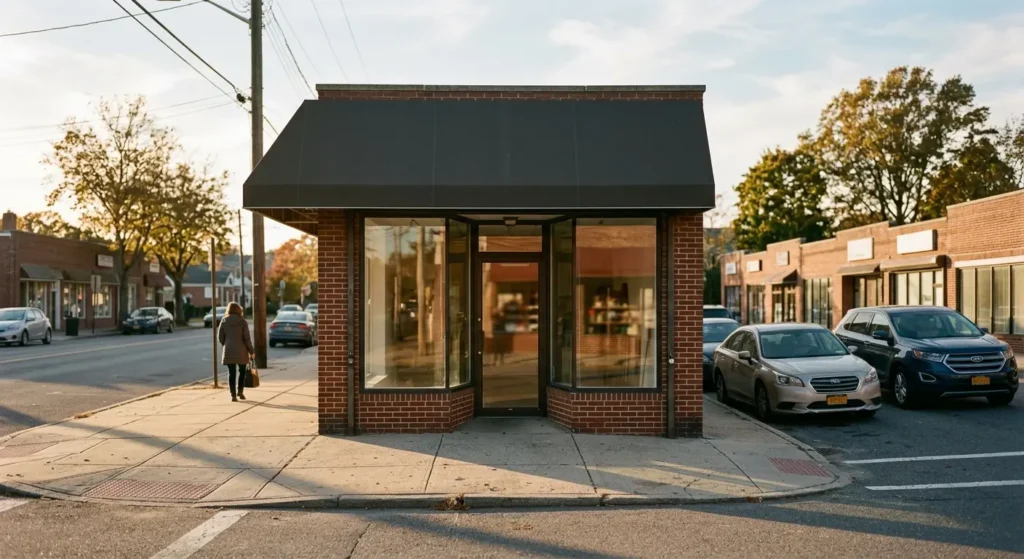
Long Island isn’t a footnote to New York City, it’s a distinct market of its own, and treating it like an NYC afterthought is exactly the mistake that makes reputation management advice feel generic to the businesses actually operating here.
Why Long Island Is a Different Market, Not a Smaller Version of NYC
Long Island is car-dependent, suburban, and organized around towns and villages rather than dense, walkable neighborhoods, which changes how customers discover and choose a business.
A customer comparing a landscaper or a dentist here is weighing a wider driving radius against a tighter, more community-connected reputation than a Manhattan apartment dweller ever has to.
That difference isn’t cosmetic. It changes which platforms actually carry weight locally, how far a single bad review travels through a community, and what kind of businesses dominate the local economy in the first place.
Nassau County vs. Suffolk County
Nassau County sits immediately east of the city, and more than 30% of its working residents commute into the five boroughs, so its economy stays closely tied to New York’s even while operating as its own dense patchwork of towns and villages, driven by healthcare, professional services, financial services, and retail.
Suffolk County, the largest county in the entire NYC metro area by land, is really two different markets in one: western towns like Babylon, Huntington, Islip, and Smithtown are densely suburban and tied to the same commuter economy as Nassau, while eastern towns like Southampton, East Hampton, Riverhead, and Southold shift into a more rural, seasonal economy built around farms, vineyards, and the Hamptons’ tourism season.
A business in Huntington and a business in Montauk are both “Long Island,” but they’re competing in genuinely different rhythms.
What Actually Changes in the Reputation Work
The mechanics of monitoring, responding, and generating reviews don’t change. What changes is the competitive radius, which platforms carry real local weight, and how much a single reputation issue can spread through a tight-knit community.
In village-scale communities, word travels fast, online and off, and local Facebook community groups and Nextdoor tend to carry real influence alongside Google and Yelp, more so than in a dense city where communities are looser and more anonymous.
East End businesses tied to tourism deal with a genuinely different review cadence too: a bad review during peak summer season carries outsized weight compared to the same review landing in a slow February.
And with far more single-family homeownership here than NYC’s apartment-heavy housing stock, home services businesses, contractors, landscapers, HVAC, roofing, make up a much bigger share of the local economy, which means reviews for a large, infrequent purchase carry more weight than they do for a quick retail transaction.
Running a business in Nassau or Suffolk County? Get a free reputation audit →
Getting Started
The vetting questions that matter are the same ones that matter anywhere, see questions to ask before hiring a reputation management company for the full checklist.
The one thing worth adding to that list here: make sure whoever you’re talking to can speak to your specific town’s competitive landscape, not just “Long Island” as a single undifferentiated area.
Frequently Asked Questions
Is reputation management different for a Long Island business than an NYC business?
The core work, monitoring, responding, and generating reviews, is the same. What differs is the competitive radius, which platforms carry local weight, and how much a single issue can spread in a tighter community.
Does it matter whether my business is in Nassau or Suffolk County?
Somewhat. Nassau is denser and more closely tied to the NYC commuter economy, while Suffolk stretches from suburban western towns to the more rural, seasonal East End, so the competitive dynamics shift depending on where you sit.
Do East End or Hamptons businesses need a different approach because of seasonality?
Yes. A business riding a summer tourism season deals with a concentrated period where reviews carry outsized weight, plus a slower off-season where response consistency still matters to maintain momentum.
Are local community platforms like Facebook groups and Nextdoor important here?
They tend to carry more real influence in tighter-knit suburban and village communities than in a dense city, so it’s worth knowing where your specific community actually talks, not just defaulting to Google and Yelp.
Is home services reputation management different on Long Island?
It’s a bigger category here simply because more residents own single-family homes than in NYC’s apartment-heavy housing stock, and reviews for a large, infrequent home project carry more weight than a quick retail purchase.
How does Long Island’s review competition compare to NYC’s boroughs?
It’s generally more localized to the town or village level rather than borough-wide, since customers are comparing options within a driving radius organized around specific towns, not a broader neighborhood.
Should I look for a provider with specific Long Island experience?
It helps. A provider who can speak to your specific town’s competitive landscape, not just “Long Island” as one undifferentiated area, is going to set more realistic benchmarks for what’s actually achievable.
What should I ask a provider pitching Long Island-specific work?
The same core questions that apply anywhere, see questions to ask before hiring, plus whether they can speak concretely to your specific town or region rather than Long Island as a whole.